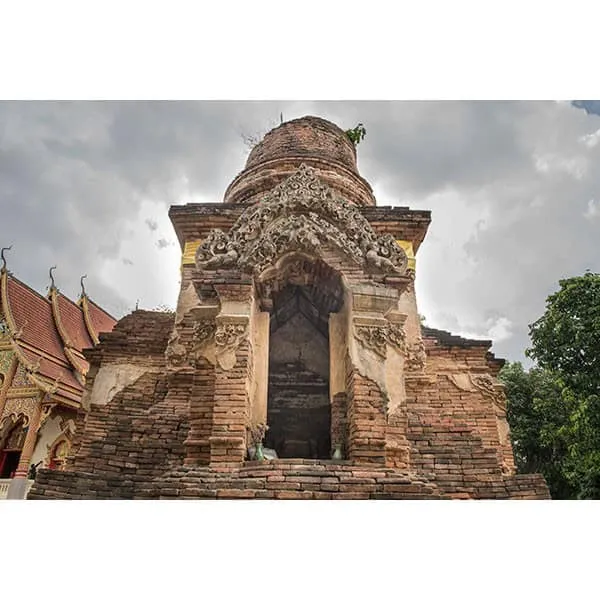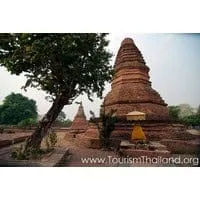








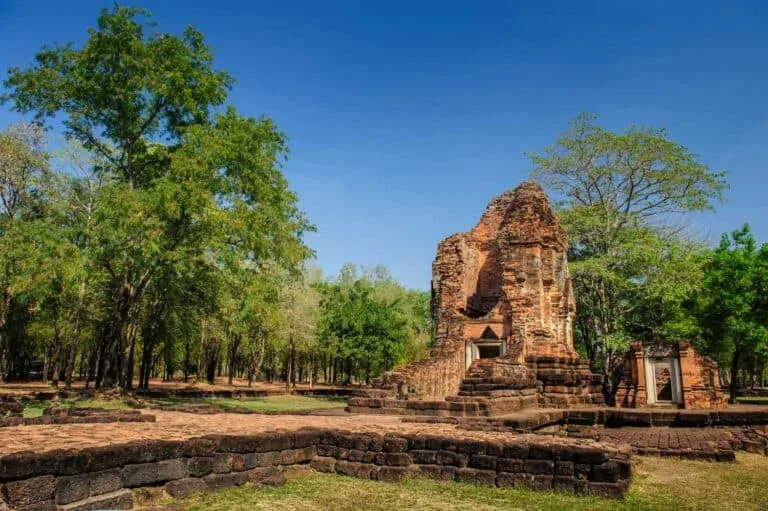
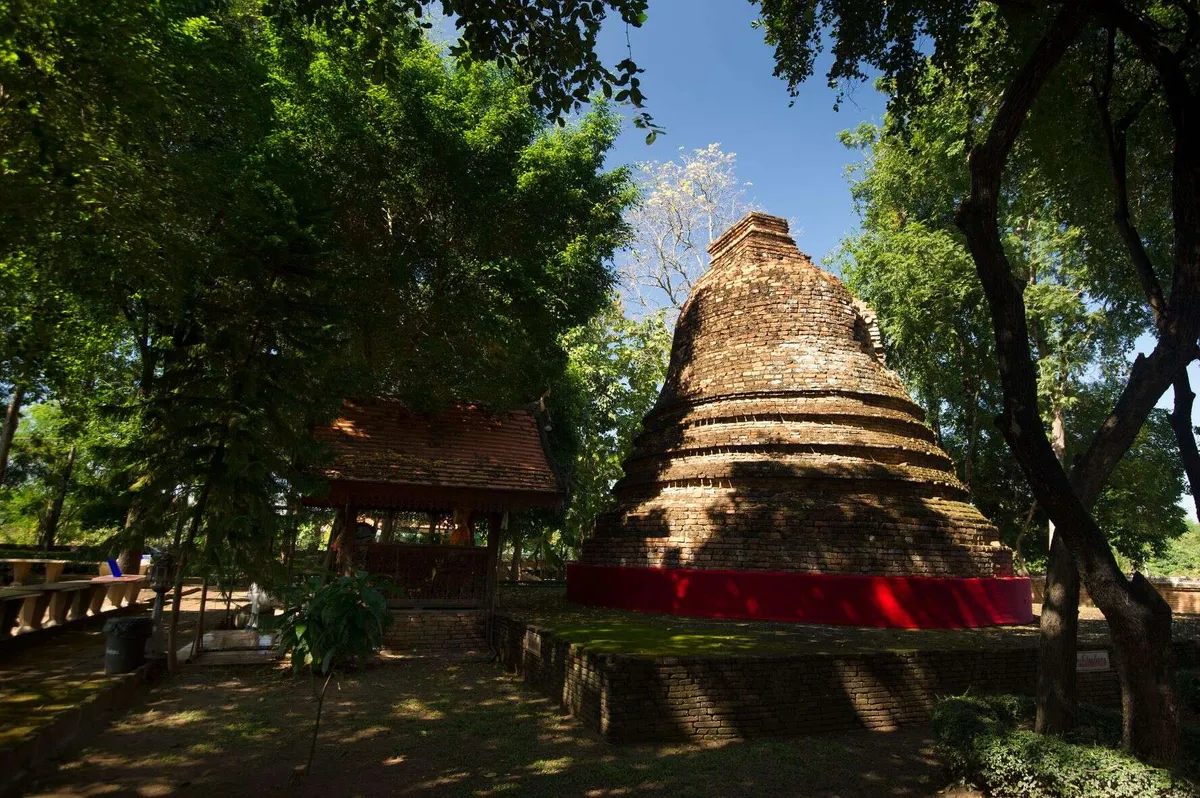
Ancient monuments rise from the fertile plains of Lamphun province, where Ku Chang-Ku Ma stands as one of northern Thailand’s most intriguing archaeological sites. These twin brick structures, whose names translate to “Elephant Mound” and “Horse Mound,” represent remnants of the powerful Hariphunchai Kingdom that once ruled this region. The site offers visitors a rare glimpse into Mon civilization and the sophisticated urban planning of medieval Southeast Asia.
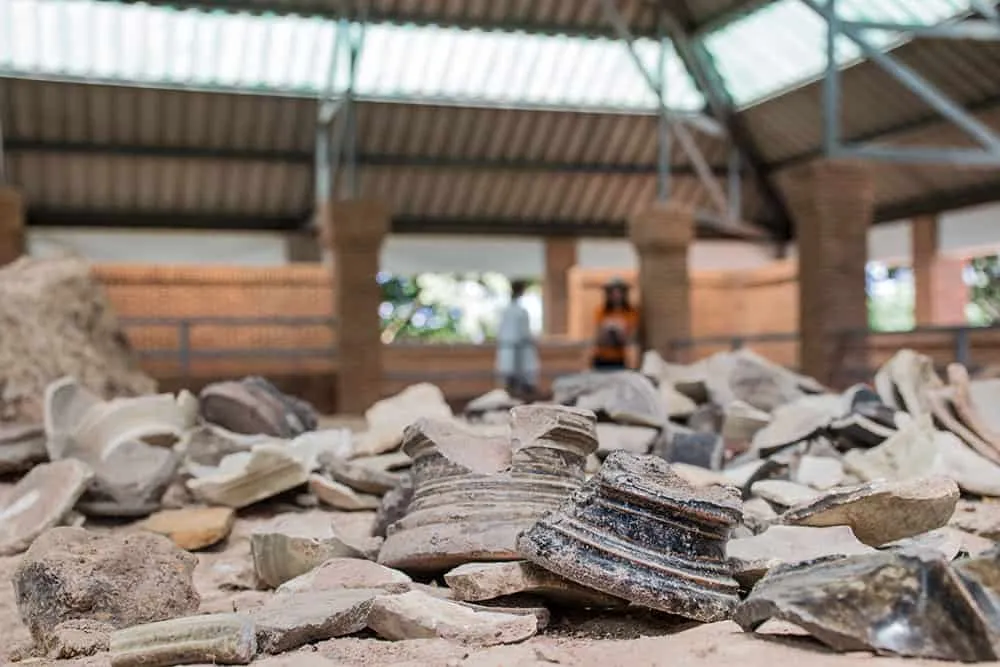
Weathered laterite and brick foundations reveal the outline of what archaeologists believe were significant religious or administrative buildings from the 8th-13th centuries. Walking among these ruins, you’ll discover intricate drainage systems and carefully planned layouts that demonstrate the engineering prowess of ancient Mon architects. The larger mound contains visible remnants of what may have been a temple complex, while pottery fragments and carved stone pieces scattered throughout the site hint at the artistic achievements of this forgotten civilization. Local information boards provide context about ongoing excavations and recent discoveries that continue to reshape our understanding of the Hariphunchai period.
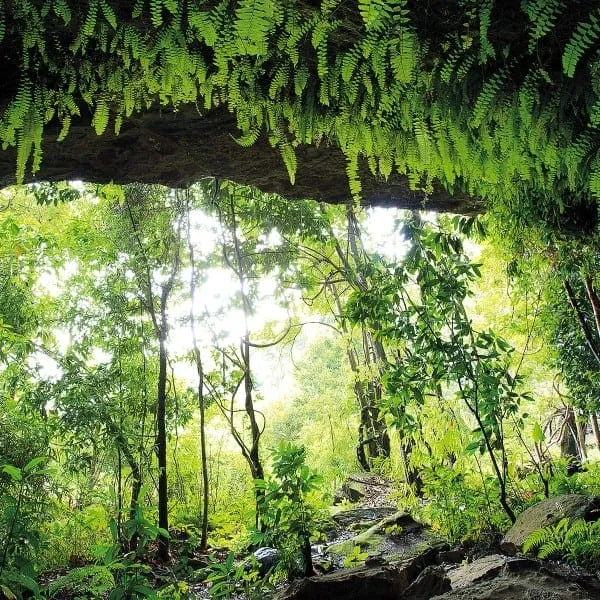
Quiet contemplation defines the experience at Ku Chang-Ku Ma, where few crowds disturb the sense of stepping back through centuries. The open landscape surrounding the ruins creates an almost meditative quality, enhanced by the gentle sounds of rural life from nearby villages. This peaceful setting allows visitors to truly absorb the historical significance of standing where Mon royalty once walked and conducted the business of their prosperous kingdom.
Early morning visits between 8-10 AM offer the most comfortable temperatures and optimal lighting for photography, while late afternoon provides dramatic shadows across the ancient structures. The site lies within easy reach of Lamphun town center, accessible by local transport or private vehicle. Bring sun protection, comfortable walking shoes, and water, as shade is limited across the archaeological area. History enthusiasts and those seeking to understand Thailand beyond its more famous temples will find this journey into Mon heritage particularly rewarding.