










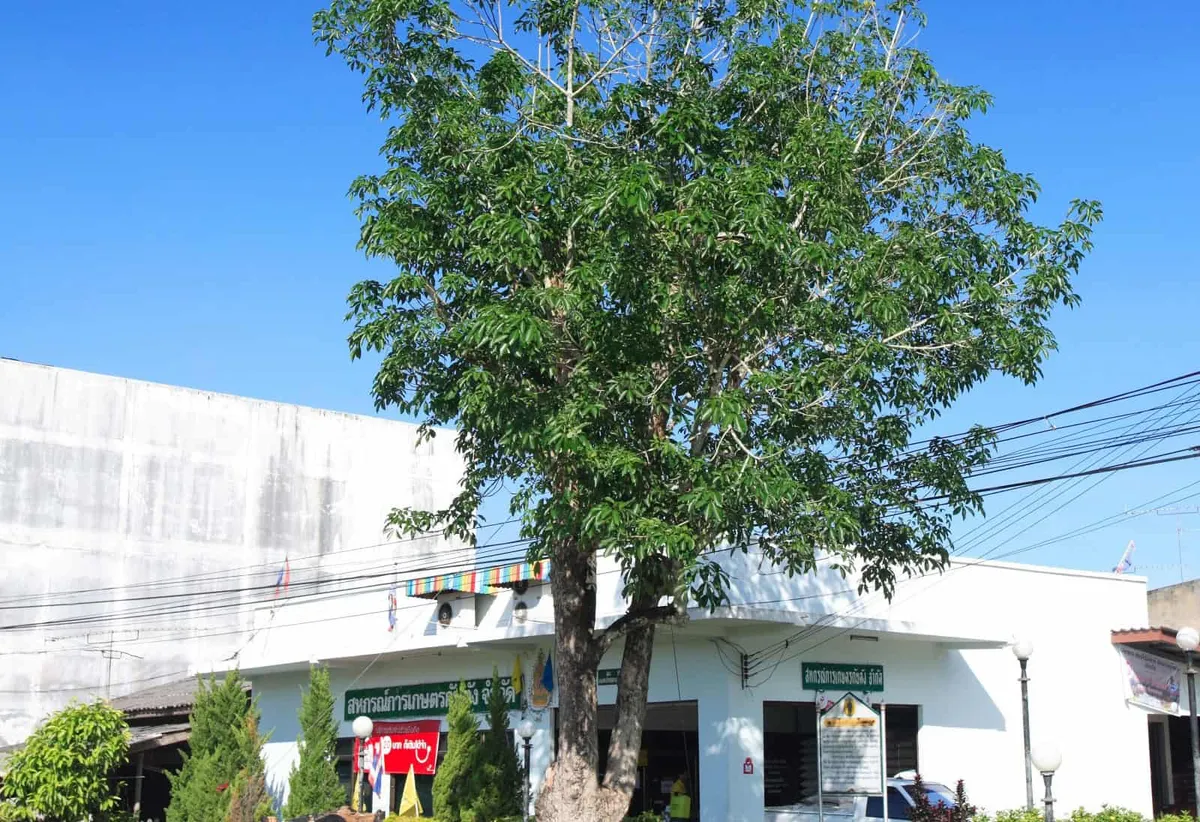
Thailand’s rubber industry began with a single tree, and you can visit the exact spot where it all started in Kantang, Trang Province. This historic rubber tree marks the birthplace of what would become one of Thailand’s most important agricultural exports, transforming the southern region’s economy and landscape forever. The original tree was planted by a government official who brought seedlings from Malaysia, making this modest monument a significant piece of Thai agricultural history.
Standing before the commemorative marker, you’ll find a simple yet meaningful display that honors this agricultural milestone. The site features informational plaques detailing the rubber industry’s development in Thailand, along with explanations of how rubber cultivation spread throughout the southern provinces. Small rubber tree saplings grow nearby, demonstrating the continuing legacy of that first planting. You can walk around the compact memorial area, read about the economic impact of rubber farming, and observe how this quiet corner of Kantang connects to Thailand’s broader industrial development. The sound of everyday life in this residential area creates an authentic backdrop to your historical exploration.
Visiting this landmark offers a contemplative experience rather than dramatic excitement. The peaceful residential setting allows for quiet reflection on how single decisions can reshape entire regions. Local residents go about their daily routines nearby, creating an authentic atmosphere that feels far removed from typical tourist circuits. This understated memorial celebrates practical progress rather than grand achievements, making it particularly meaningful for visitors interested in Thailand’s economic development and agricultural innovation.
Early morning or late afternoon visits provide the most comfortable conditions, especially during Trang’s warm months. The site lies within Kantang town, easily accessible by local transport or as part of a broader exploration of Trang Province. Bring a camera for the historical marker and comfortable walking shoes for the surrounding area. While brief, this stop offers valuable context for understanding southern Thailand’s agricultural heritage and makes an interesting addition to any Trang itinerary focused on local history and culture.