























Bangkok Street Food Guide: Where to Eat in Every Neighbourhood
Published 13 April 2026
Bangkok has more street food than any city on earth. That is not travel-writer exaggeration — the sheer density of carts, stalls, shophouses, and makeshift kitchens crammed into every soi is genuinely staggering. The problem is not finding food. It is knowing which of the ten thousand options in front of you is worth stopping for.
This guide is organised by neighbourhood because that is how you will actually eat in Bangkok. You will be in Chinatown after visiting Wat Traimit, or near Silom after a meeting, or killing time around Victory Monument waiting for a bus. Each section gives you specific stalls, specific dishes, and enough detail to walk straight there.
- Average street food dish: 40-80 THB ($1.10-$2.20 USD)
- Best eating hours: 11 AM-1 PM (lunch) and 6-9 PM (dinner)
- Bring cash in small bills — 20s and 50s. No cards
- Many stalls close Mondays — check before making a special trip
- Download a map app and get an eSIM before you arrive — Google Maps pins are how you will find half of these places
Yaowarat (Chinatown)
The heavyweight. Yaowarat Road and its side streets have the highest concentration of street food in Bangkok, and the quality ceiling is the highest too. The trade-off: crowds are intense after 7 PM, the heat from charcoal grills radiates off every surface, and you will queue for anything good.
What to eat:
T&K Seafood (Soi Phadung Dao, the green-shirted place) — grilled river prawns the size of your forearm, crab fried rice, and tom yum goong. The prawns are the move here, 300-400 THB for a plate depending on size. They are always busy and the wait can hit 30 minutes after 7 PM. The seafood is fresh and cooked on blazing charcoal right in front of you. Tables spill across the alley — you will eat on a plastic stool with motorbikes squeezing past.
Nai Ek Kuay Teow Ruea (Yaowarat Soi 9) — the original boat noodle shop, operating since the 1960s. Small bowls of pork or beef noodles in a dark, intense broth thickened with blood. Each bowl is 20-30 THB and you are meant to eat three or four. The broth here has more depth than the Victory Monument boat noodle places — anise, cinnamon, fermented tofu. Open from late morning through to about 9 PM.
Guay Jab Ouan Pochana (near the Yaowarat-Charoen Krung intersection) — rolled rice noodles in a peppery pork broth with offal, crispy pork belly, and a soft-boiled egg. A single bowl (60-80 THB) is a complete meal. This is comfort food, not Instagram food, and it is better for it.
Jay Fai (Maha Chai Road, technically just outside Chinatown) — the most famous street food stall in Thailand, one Michelin star, and a 2-3 hour queue. The crab omelette (1,000 THB) and drunken noodles (200-300 THB) are legitimately excellent. But let me be honest: the prices are ten times what you will pay elsewhere, and the wait is brutal in Bangkok heat. Go if the experience matters to you. Skip if you would rather eat seven other meals in the same time.
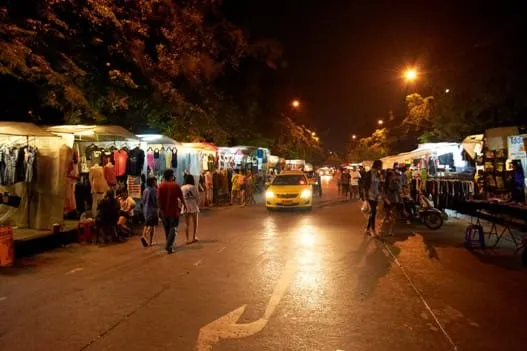
Late-night Chinatown — after 10 PM, the main Yaowarat strip thins out but the side sois stay alive. Look for grilled squid vendors (40-60 THB), mango sticky rice carts (60-80 THB), and the ba mee vendors serving springy egg noodles with wonton and roast pork. The best late eating is on Soi Texas (Soi Phadung Dao 1) where several seafood stalls compete for your attention until midnight.
Getting there: MRT Wat Mangkon station drops you right in the middle. Walk toward the big Chinatown gate and follow the smoke.
Sukhumvit
The long commercial spine of modern Bangkok. Street food here is scattered rather than concentrated — you have to know where to look because the malls and restaurants dominate the streetscape.
Soi 38 — this was Bangkok’s most famous street food strip for decades. Bad news: most of the original stalls were cleared out around 2019 for development. A few have returned, and there is a small food area on the corner. It is not what it was. Worth a quick stop if you are nearby, not worth a special trip.
Terminal 21 Food Court (BTS Asok, 5th floor) — not street food in the traditional sense, but the prices are. This food court uses a coupon system (buy a card at the counter, refundable balance) and dishes run 40-75 THB. The pad kra pao stall does a solid basil chicken. The som tum station makes it fresh to order — specify your spice level (pet nit noi for mild, pet mak for Thai-hot). The mango sticky rice here is 60 THB and consistently good. Air-conditioned, clean, and useful when the heat breaks you.
Isan food on Soi 11 — walk past the bars and hotel entrances on Soi 11 and you will find a cluster of Isan (northeastern Thai) food carts in the evening. Som tum (papaya salad, 50-60 THB), gai yang (grilled chicken, 80-120 THB for a half), sticky rice (10 THB per basket), and laab (minced meat salad, 60-80 THB). This is workers’ food cooked by people from Isan — the flavours are sharp, sour, spicy, and real. Point at what you want if your Thai is limited.
Phra Khanong / On Nut — further down the BTS line (3-4 stops past Asok), the street food gets cheaper and more local. The night market near On Nut BTS has excellent moo ping (grilled pork skewers, 10 THB each) and khao man gai (chicken rice, 40-50 THB). Fewer tourists, better prices.
Getting there: BTS Sukhumvit Line serves the entire strip. Asok, Phrom Phong, Thong Lo, On Nut — pick your station.
Silom / Sathorn
Bangkok’s financial district. At lunchtime, the side streets fill with office workers queueing for quick, cheap meals. After 6 PM, the stalls thin out as the suits go home — but Convent Road and some Silom soi stalls keep going.
Convent Road stalls (off Silom, near BTS Sala Daeng) — the lunchtime strip here runs from about 10:30 AM to 2 PM, Monday to Friday. Vendors set up along the road selling khao gaeng (rice with curry, 40-60 THB — point at two or three curries and they go on your rice), pad see ew (60 THB), and bags of fresh fruit (20-30 THB). The quality is high because competition is fierce — these vendors feed the same office workers every day.
Soi Convent lunch spots — Hai Somtam Convent is a permanent Isan restaurant on this soi, not technically street food but priced like it (dishes 60-120 THB). The som tum here is made to order with mortar and pestle, and you can control the chilli level. The lab moo (spicy minced pork) is excellent. Packed at noon.
After-work street food — walk along Silom Road toward Saphan Taksin BTS after 5 PM. Grilled meat skewers (moo ping, 10 THB each), bags of sliced fruit, and the occasional khao kha moo stall (braised pork leg on rice, 50-60 THB). Look for the stall with the biggest queue of Thai people — that is your dinner.
Soi Sala Daeng night food — a few stalls set up here in the evening selling pad thai (50-60 THB) and chicken satay (40 THB for 4 sticks, served with peanut sauce and cucumber relish). Not life-changing but solid and convenient if you are in the area.
Getting there: BTS Sala Daeng or MRT Silom. Both stations are right on top of the action.
Rattanakosin (Old Town)
The historic district around the Grand Palace and Wat Pho. Tourist density is high here, which means prices are slightly inflated and some stalls cater more to what tourists expect than what locals eat. But there are genuine standouts.
Thipsamai (Maha Chai Road) — the most famous pad thai in Bangkok. The “superb” pad thai (wrapped in egg) runs 100-150 THB, which is double what you would pay at a random stall, but the wok hei (smoky caramelisation) on their noodles is noticeably better. Queue starts forming at 5 PM and peaks around 7 PM. The orange juice here is also excellent — fresh-squeezed, 40 THB. They close when the noodles run out, usually by 9-10 PM.
Boat noodle stalls near Phra Athit — several small shops along Phra Athit Road serve boat noodles in the traditional tiny-bowl format. Less famous than Victory Monument but less crowded too.
Khao gaeng stalls near Sanam Luang — early morning stalls (6-10 AM) near the big field sell rice with curry to government workers and temple visitors. Three curries on rice for 40-50 THB. The massaman and green curry here are good.
Mont Nomsod (Tanao Road) — a bakery-cafe that is technically not street food, but locals treat it like a stall. Famous for toast with condensed milk and ovaltine (30-40 THB) and Thai-style iced coffee. Been here for decades. Open from early morning.
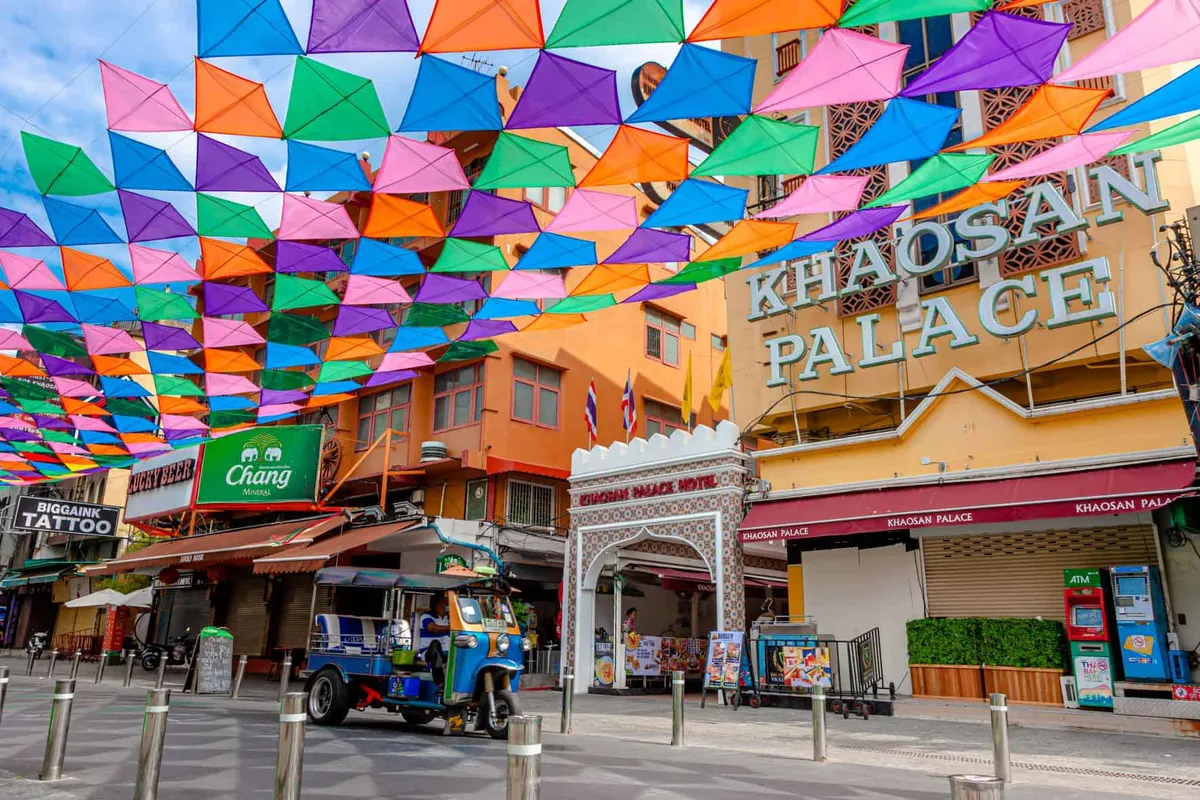
Warning: The area directly in front of the Grand Palace and along Khaosan Road (which is nearby) has the highest tourist-tax markup. A pad thai that costs 50 THB in Silom will cost 80-100 THB here. The quality is not proportionally better.
Getting there: MRT Sanam Chai is closest to Wat Pho. Chao Phraya Express Boat to Phra Athit pier for the northern end. See our getting around Thailand guide for river boat details.
Bang Rak
The old trading district along Charoen Krung Road, between Chinatown and Sathorn. This area has seen a wave of gentrification — rooftop bars, galleries, boutique hotels — but the street-level food remains solidly old-school.
Indian food on Charoen Krung — the stretch near the old GPO building and the Haroon Mosque has been serving South Asian food for over a century. Roti mataba (stuffed flatbread with curried meat, 40-60 THB), naan with curry, and biryani (60-80 THB). The Muslim food stalls here are some of the best non-Thai food in the city. Look for Royal India for sit-down, or the street carts along the mosque wall for grab-and-go roti.
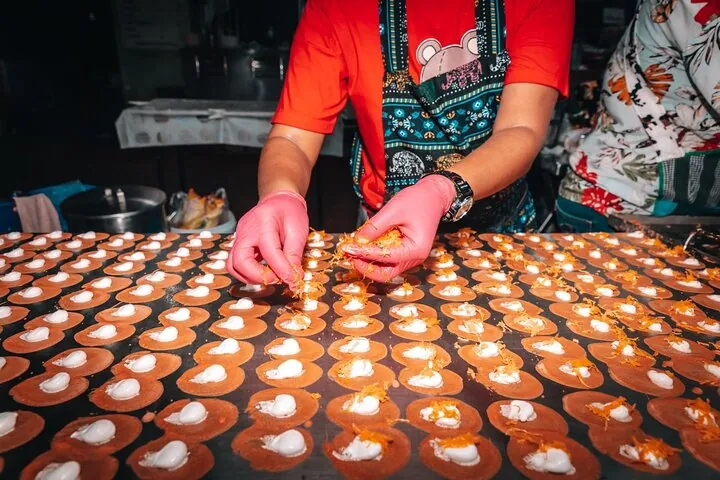
Tellak bakery area (near Charoen Krung Soi 28-30) — old Chinese-Thai bakeries selling khanom (sweets and pastries). Egg tarts, pork buns (salapao, 15-20 THB), and kanom buang (crispy Thai crepes with coconut cream, 10-15 THB each). These bakeries have been here for generations and the recipes have not changed.
Talat Noi neighbourhood — the area between Chinatown and the river has excellent shophouse restaurants. Look for ba mee (egg noodle) shops and congee stalls in the morning (30-50 THB). This neighbourhood is quieter than Yaowarat with similar quality.
Getting there: MRT Hua Lamphong and walk, or BTS Saphan Taksin and walk north along Charoen Krung. It is about a 15-minute walk either way.
Ari / Pradiphat
A residential neighbourhood north of the city centre that has become Bangkok’s go-to for young Thai professionals and creatives. The food scene here blends old-school street stalls with newer cafe-restaurants. Less tourist traffic, more genuine neighbourhood eating.
Soi Ari morning market — along Soi Ari (Phahon Yothin Soi 7), morning vendors sell khao niew moo ping (sticky rice and grilled pork, 30-40 THB for a complete breakfast), pa tong go (Thai-style fried dough for dipping in condensed milk or congee, 20 THB), and strong Thai iced coffee (25-35 THB). This is what Bangkok’s working breakfast actually looks like.
Pad kra pao stalls around Ari BTS — several lunch stalls within a 5-minute walk of Ari BTS do excellent kra pao (basil stir-fry). The standard order is kra pao moo sab kai dao — minced pork with basil, chilli, and garlic over rice, topped with a fried egg. 50-60 THB. This is the single most-eaten lunch in Thailand and a good Ari stall does it with proper wok heat and enough holy basil to actually taste it.
Pradiphat Road night stalls — Pradiphat runs parallel to Phahon Yothin and after 5 PM, food carts appear along both sides. Highlights include kuay teow tom yum (noodle soup in spicy-sour broth, 50-60 THB), moo satay, and various khao gaeng (curry over rice) stalls. The vibe is entirely local — office workers eating dinner before heading home.
Getting there: BTS Ari station. Everything is within a 10-minute walk.
Victory Monument Area
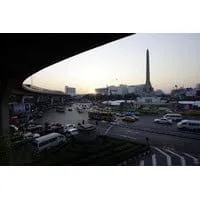
A major transit hub where BTS, buses, and minivans converge. The food around here is cheap even by Bangkok standards because the customer base is students and commuters who eat here every day.
Boat Noodle Alley (officially Soi Rang Nam) — a narrow street packed with boat noodle shops, each serving tiny bowls for 13-20 THB. The tradition is to stack your empty bowls to count your total. Most people eat 5-8 bowls. The pork version with blood (sounds intense, tastes like rich iron-y broth) is the classic. The beef version is milder. Some shops have been here 30+ years.
How to order: Sit down, tell them moo (pork) or nuea (beef), sen lek (thin noodles) or sen yai (wide), and they bring you a bowl. Keep ordering until you are full. They count your bowls at the end. Budget 100-160 THB for a full meal of 6-8 bowls.
Cheap eats around the monument — the streets radiating from Victory Monument BTS have dozens of stalls selling khao man gai (chicken rice, 40 THB), kuay teow (noodle soup, 40-50 THB), and bags of grilled moo ping (10 THB per stick). The chicken rice stalls compete aggressively here and the quality is solid across the board.
Century Plaza area — the old shopping complex nearby has a ground-floor food area where you can get full meals for 35-50 THB. Not glamorous, but this is where Bangkok eats when Bangkok is in a hurry.
Getting there: BTS Victory Monument. The station is in the middle of everything.
Practical Tips
Hygiene
Trust your eyes and your nose. A stall with high turnover — dozens of people eating, constant cooking — is safer than a quiet one where food sits. Watch for: meat kept at room temperature for hours, reused oil that has gone dark brown, and flies on uncovered food. That said, Bangkok street food is remarkably safe considering the volume. Millions of people eat from these stalls daily. The biggest risk is over-ordering when you are hungry and getting a stomach ache from sheer volume, not contamination.
Carry hand sanitiser. Not every stall has a handwash station.
Best Times to Eat
- Breakfast (6-9 AM): Congee, pa tong go, moo ping, Thai coffee. Morning markets are active
- Lunch (10:30 AM-2 PM): The best variety. Office-district stalls in Silom, Sukhumvit, Ari
- Dinner (5-9 PM): Evening stalls appear. Chinatown peaks at 7-8 PM
- Late night (10 PM-midnight): Chinatown side streets, On Nut market, roti stalls around Silom
Avoid the 2-4 PM dead zone. Most stalls close between lunch and dinner. If you are hungry mid-afternoon, head to a food court (Terminal 21, MBK, Siam Paragon basement) — these stay open all day.
How to Order
Point and smile works everywhere. Learn three phrases:
- Ao an nee (I want this one) — while pointing
- Pet nit noi (a little spicy) — unless you can handle real Thai heat
- Check bin (bill please)
Most stalls have no English menu. Look at what other people are eating and point at that. If a stall has photos on the cart, even easier.
Money
Street food is cash only. Carry small bills — a 1,000 THB note ($28 USD) at a 50 THB noodle stall will get you an exasperated look and sometimes a flat refusal. Hit an ATM for 1,000-2,000 THB and break the big notes at a 7-Eleven before you start eating. See our money in Thailand guide for ATM and currency tips.
Getting Around Between Neighbourhoods
The BTS and MRT connect most of these areas. Yaowarat (MRT Wat Mangkon), Silom (BTS Sala Daeng), Sukhumvit (BTS Asok onwards), Ari (BTS Ari), Victory Monument (BTS Victory Monument) — you can hop between food neighbourhoods in 15-20 minutes. For Rattanakosin, the Chao Phraya river boat from Saphan Taksin is the most pleasant option. Grab (the Southeast Asian Uber) fills the gaps. Make sure you have mobile data — an eSIM will save you from hunting for WiFi every time you need to check a map or call a Grab.
For a full overview of Bangkok — temples, nightlife, accommodation, and day trips — see our main destination guide.
What to Eat First: The Short List
If you are in Bangkok for a limited time and want to taste the essentials, eat these in this order:
- Pad kra pao moo sab kai dao — basil pork with fried egg on rice (any lunch stall, 50-60 THB)
- Boat noodles — Victory Monument or Chinatown (stack 5-6 bowls, ~100 THB total)
- Som tum + gai yang + sticky rice — an Isan stall in Sukhumvit or Silom (~150 THB for all three)
- Khao man gai — chicken rice, the Thai equivalent of a good sandwich (any street stall, 40-50 THB)
- Mango sticky rice — when in season (March-June is peak), the best dessert in the country (60-80 THB)
- Kuay teow tom yum — spicy-sour noodle soup, the dish that represents Bangkok’s Chinese-Thai fusion (50-60 THB)
Six meals, under 500 THB total ($14 USD). That is a day of eating in Bangkok.
Frequently Asked Questions
Is Bangkok street food safe to eat?
Yes, with common sense. Eat from stalls with high turnover — food sitting in trays for hours is the risk, not the cooking itself. Stalls that cook to order are safest. Avoid raw vegetables and ice from unknown sources if you have a sensitive stomach, though most ice in Bangkok is factory-made and fine. Carry Imodium just in case. The sickest most people get in Bangkok is from hotel buffets, not street carts.
How much does street food cost in Bangkok?
Most dishes cost 40-80 THB ($1.10-$2.20 USD). A full meal with a drink runs 80-150 THB ($2.20-$4.20). Chinatown seafood stalls are pricier at 150-400 THB per dish. Jay Fai is an outlier at 1,000+ THB. You can eat three meals a day from street stalls for under 300 THB ($8.50).
What time is best for Bangkok street food?
Lunch stalls open 10:30 AM to 2 PM. Evening street food kicks in around 5 PM and runs until 10-11 PM. Chinatown is best after 6 PM and peaks around 8-9 PM. Early morning markets (6-9 AM) sell congee, pa tong go (fried dough), and coffee. Many stalls close on Mondays.
Do Bangkok street food stalls accept credit cards?
Almost never. Street food is a cash economy. Some newer stalls accept PromptPay QR codes, but bring cash in small bills — 20 and 50 THB notes. Vendors often cannot break 1,000 THB notes. ATMs are everywhere along main roads.
What should I eat first in Bangkok?
Start with pad kra pao (basil stir-fry with fried egg on rice) — it is the national lunch and costs 50-60 THB anywhere. Then try boat noodles (small bowls, 15-20 THB each, eat 3-4). For dinner, get som tum (papaya salad) and grilled pork neck from an Isan stall. These three meals will cost under 200 THB total and give you a real cross-section of Thai street food.
Are there vegetarian options at Bangkok street food stalls?
Limited but available. Look for jay (เจ) stalls marked with yellow flags — these serve vegan Chinese-Buddhist food and appear everywhere during the Vegetarian Festival (October) and year-round in Chinatown. Pad thai can be made without meat. Som tum can be ordered without dried shrimp (mai sai kung haeng). Mango sticky rice is naturally vegetarian. Most curries and stir-fries use fish sauce and oyster sauce, so fully vegan eating takes effort.