






Thailand Festivals 2026: Songkran, Loy Krathong & More


Thailand celebrates more festivals per year than almost any country on earth: from the world’s largest water fight to lantern releases that light up entire city skies, from nine days of ritual body piercing to mysterious fireballs rising from the Mekong River. This guide covers the festivals actually worth planning a trip around, with dates, locations, and what to expect at each one.
- 5–7 Feb 2027: Chiang Mai Flower Festival
- 6–7 Feb 2027: Chinese New Year, Yaowarat / Phuket / Hat Yai
- 21 Feb 2027: Makha Bucha Day (Public Holiday)
- 13–15 Apr: Songkran (Thai New Year), nationwide, same dates every year
- Mid Apr, 2027 dates TBA: S2O Songkran Music Festival, Bangkok
- Mid May, 2027 dates TBA: Bun Bang Fai Rocket Festival, Yasothon
- 20 May 2027: Visakha Bucha Day (Public Holiday)
- Jun/Jul, dates TBA: Phi Ta Khon Ghost Festival, Dan Sai, Loei
- 18–19 Jul 2027: Asanha Bucha & Khao Phansa (Buddhist Lent begins)
- 17–19 Jul 2027 (expected): Ubon Ratchathani Candle Festival, Khao Phansa candle parades
- 10–18 Oct 2026: Phuket Vegetarian Festival
- 25 Oct 2026: Buffalo Racing Festival, Chonburi
- 26 Oct 2026: Naga Fireballs, Nong Khai
- 24 Nov 2026: Loy Krathong, nationwide
- 24–25 Nov 2026: Yi Peng Lantern Festival, Chiang Mai
- 29 Nov 2026: Monkey Buffet Festival, Lopburi
- 3–7 Dec 2026: Wonderfruit Festival, near Pattaya
- 11–13 Dec 2026: Tomorrowland Thailand, Pattaya
Full month-by-month breakdown including public holidays: Events Calendar
Most festivals are free, happen in public spaces, and welcome visitors. Lunar-dependent dates shift each year. Check the events calendar for confirmed dates.
Songkran Festival
April 13-15 | Nationwide | Free
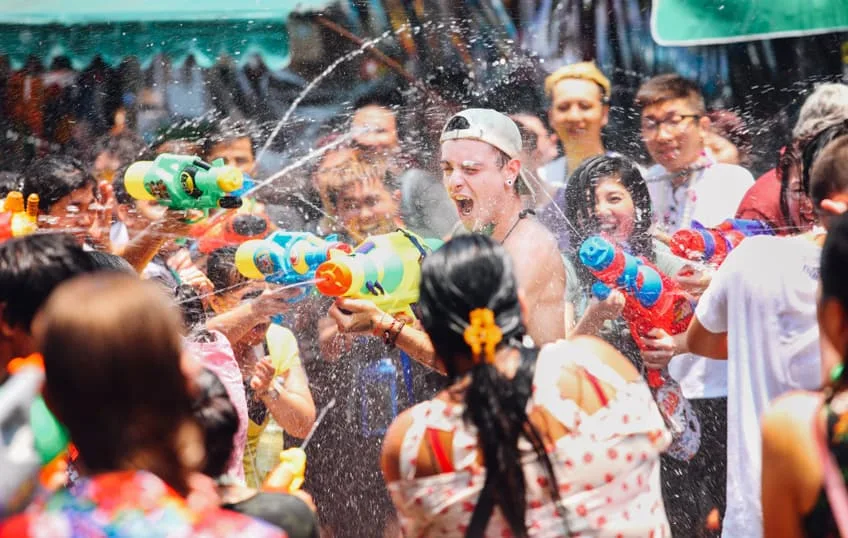
Thailand’s biggest party: three days of citywide water fights marking the Thai New Year. Bangkok’s Silom Road, Chiang Mai’s Old City moat, and Pattaya’s beachfront are the main battlegrounds, but water fights break out everywhere across the country.
The tradition began as a gentle water-pouring ritual to cleanse bad luck and pay respect to elders. That still happens at temples each morning. By midday, the streets become one long water fight with water guns, hoses, and ice buckets.
Insider Tip: Chiang Mai’s moat area is the most photogenic. Bangkok’s Silom is the most intense. Avoid driving: road accidents spike sharply during Songkran week.
Read our complete Songkran Festival guide: what to bring, where to celebrate, safety tips, and etiquette.
Loy Krathong
24 November 2026 | Nationwide | Free
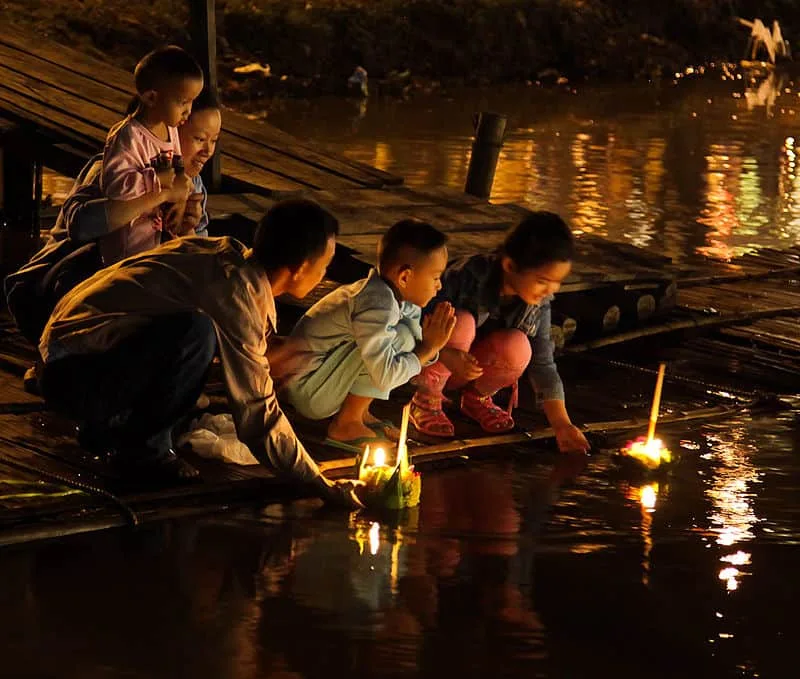
On the full moon night of the 12th lunar month, Thais release small decorated baskets (krathongs) made from banana leaves into rivers and canals. Each carries a candle, incense, and flowers, an offering to the water spirits and a symbolic release of bad luck from the past year.
The best locations: Sukhothai (the original home of the festival, with a historical park setting), Chiang Mai (combined with Yi Peng lanterns), and Bangkok’s Chao Phraya River. Ayutthaya’s ancient ruins make a dramatic backdrop.
Read our complete Loy Krathong guide: best locations, what to expect, and how to make your own krathong.
Yi Peng Lantern Festival
24–25 November 2026 | Chiang Mai | From ~4,900 THB (ticketed venues) or free at temples
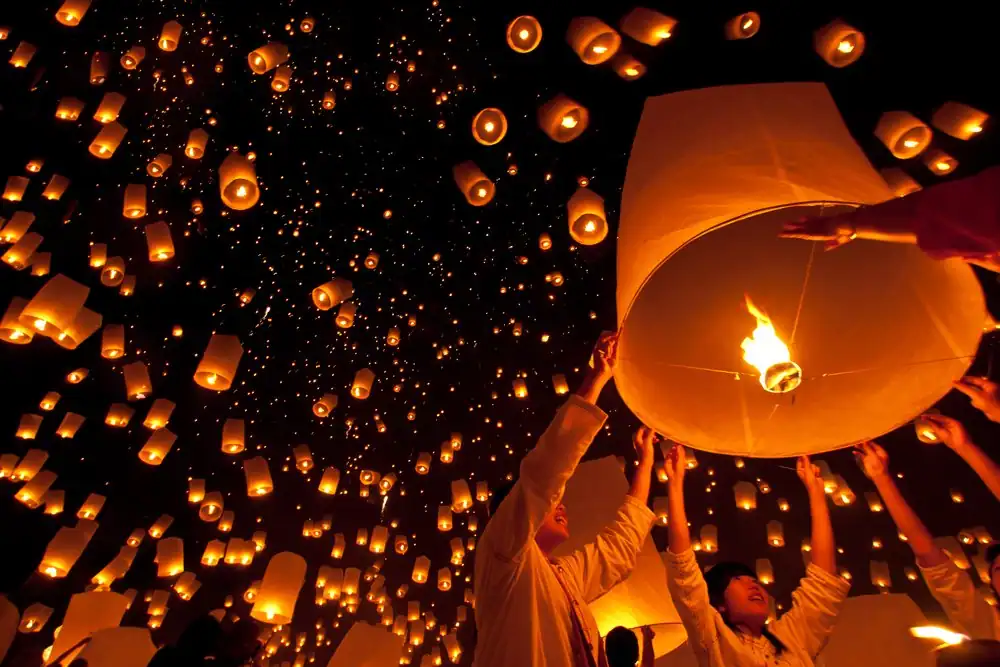
Yi Peng coincides with Loy Krathong in Chiang Mai, turning the city into a double festival. The signature moment: thousands of paper sky lanterns (khom loy) released simultaneously into the night sky, creating a slow-moving river of light above the Old City.
Ticketed mass-release events (CAD Khomloy and others) guarantee the full spectacle: a single coordinated release of thousands of lanterns. Free alternatives include temple ceremonies at Wat Suan Dok and walking the moat at midnight.
Read our complete Yi Peng guide: ticket options, best viewing spots, photography tips.
Bun Bang Fai: Rocket Festival
Mid May: 2027 dates to be announced | Yasothon and Isaan region | Free
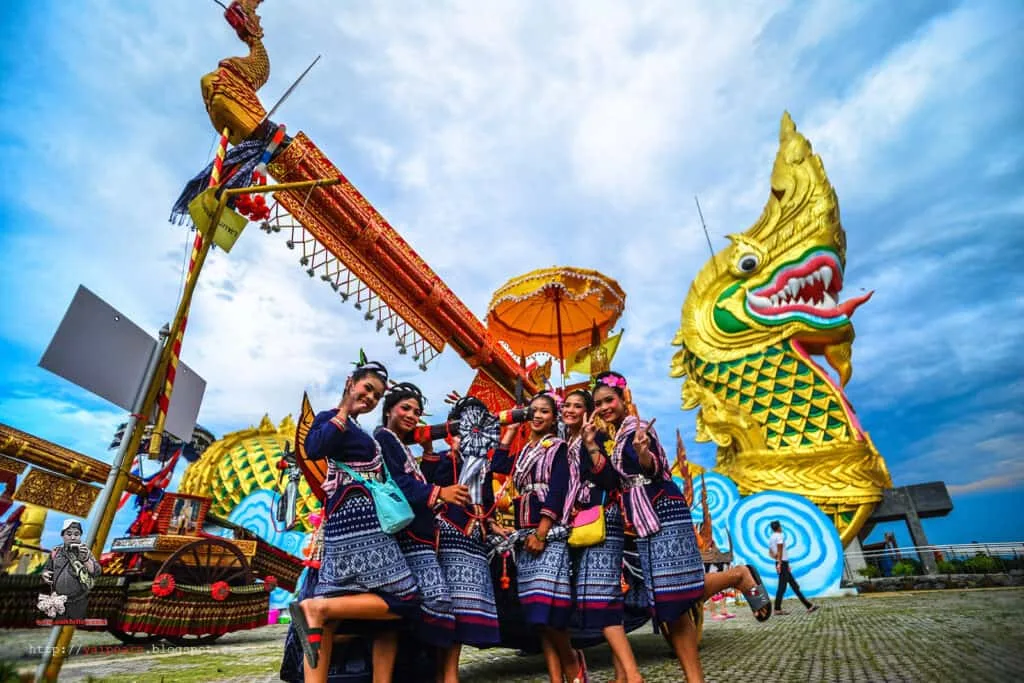
Villages across northeast Thailand build giant bamboo rockets and fire them into the sky to call the rains, a pre-Buddhist animist tradition that predates the country’s conversion to Buddhism by centuries. The Yasothon festival is the largest, featuring homemade rockets up to 9 metres long with wagers placed on launch height and duration.
Participants who fail to launch a rocket successfully get thrown in the mud. The atmosphere is carnivalesque: drinking, dancing, and good-natured chaos throughout the day.
Read our complete Bun Bang Fai guide: what to expect, how to get to Yasothon, and the best viewing spots.
Phuket Vegetarian Festival
10–18 October 2026 | Phuket Town | Free to watch
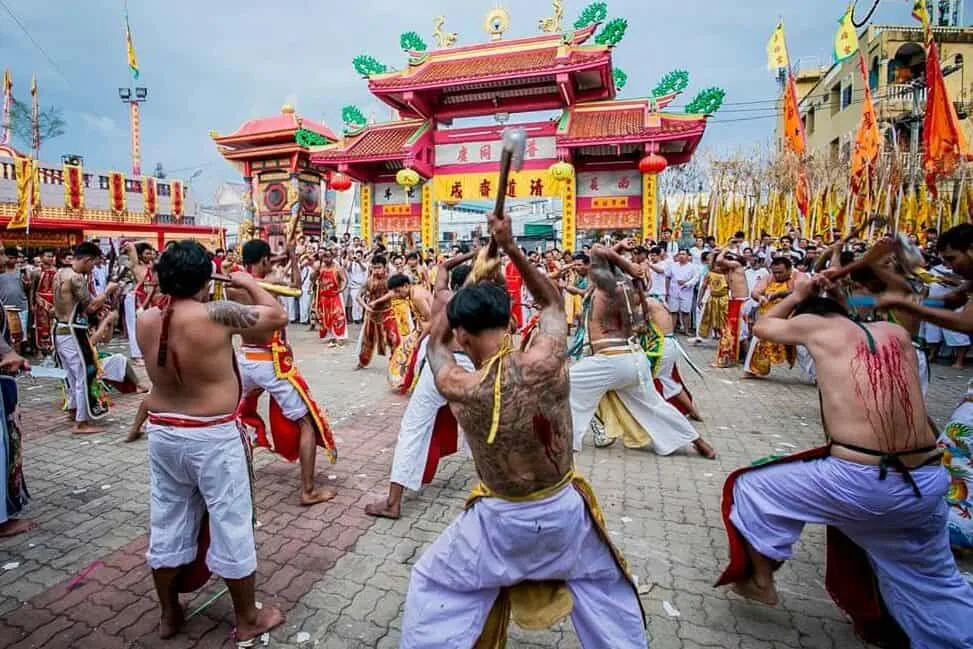
Nine days of Chinese Taoist ritual centred on five shrines in Phuket Town. Devotees in white clothing abstain from meat, alcohol, and sex while some undergo extreme acts of self-mortification (walking on hot coals, piercing cheeks with skewers and swords) to demonstrate spiritual power and gain merit for their communities.
The street processions are the main spectacle: shrines carry their deity statues through town accompanied by firecrackers, drums, and devotees in trance states. The vegetarian food stalls (marked with yellow flags) are excellent and cheap throughout the festival.
Warning: Stay well back from the processions: firecrackers are thrown at close range and pieces of devotees’ piercings can fly into crowds.
Read our complete Phuket Vegetarian Festival guide: full 9-day schedule, ritual details, and vegetarian food tour tips.
Chinese New Year
6–7 February 2027 | Bangkok, Phuket, Hat Yai | Free
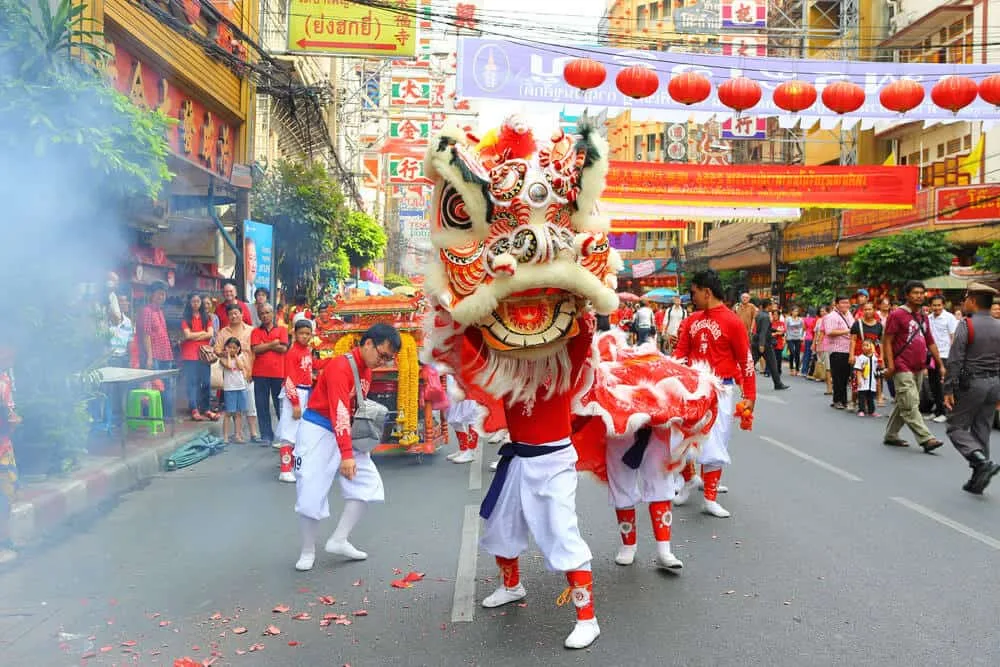
Trut Chin (ตรุษจีน) is not an official public holiday but is celebrated enthusiastically by Thailand’s large Thai-Chinese community. Bangkok’s Yaowarat Road (Chinatown) hosts the biggest celebrations: lion and dragon dances, firecrackers, and street food from Hua Lamphong to Ratchawong. Phuket Old Town and Hat Yai hold their own major events.
Read our complete Chinese New Year guide: covering Yaowarat, Phuket Old Town, and practical tips.
Chiang Mai Flower Festival
5–7 February 2027 | Chiang Mai | Free
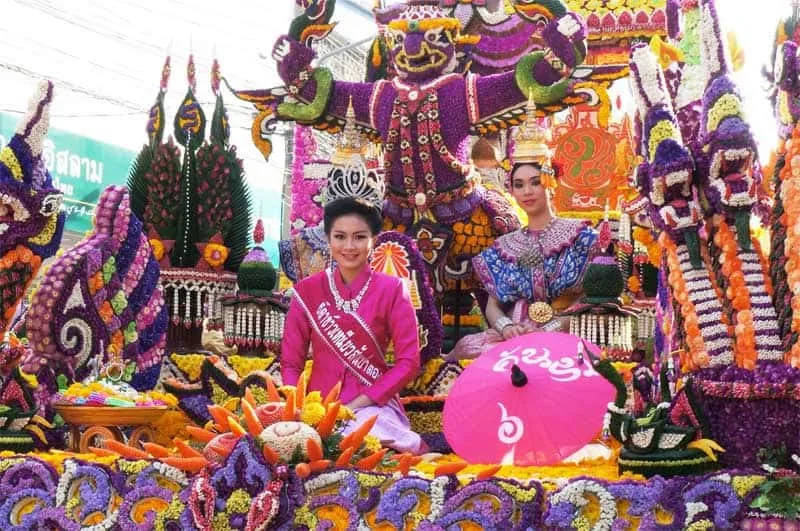
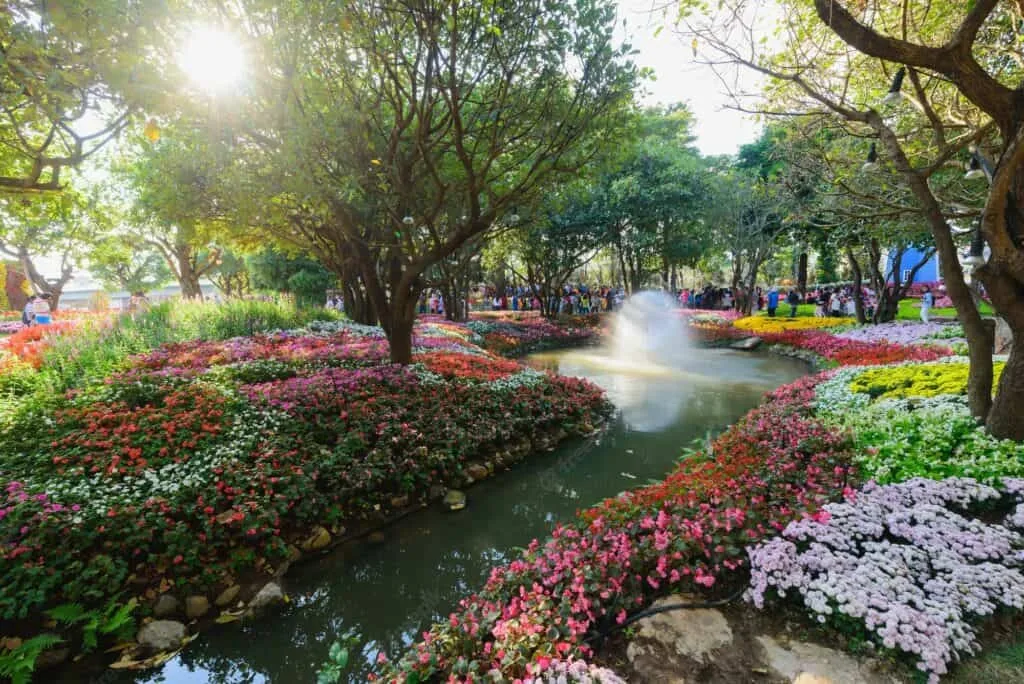
Three days of flower-decorated floats parading through Chiang Mai’s streets, with beauty contests and flower-arranging competitions. The parade runs along Nimman Road and through the Old City. Flower stalls line the moat area for the full weekend. A lower-key event than Songkran but worth timing a Chiang Mai visit around if you’re already in the north in early February.
Read our complete Chiang Mai Flower Festival guide: parade routes, park locations, and photography tips.
Chiang Rai
Late December – January | Chiang Rai | Free
Held at Mae Kok Riverside Flower Park on the banks of the Kok River, Chiang Rai’s cooler climate allows cold-climate plants that don’t grow elsewhere in Thailand. Market stalls, food vendors, live music, and evening light shows. A good reason to visit Chiang Rai in the shoulder season between Christmas and Chinese New Year.
Phi Ta Khon: Ghost Festival
Mid June – early July (2027 dates TBA; 2026 ran 20–22 June) | Dan Sai, Loei Province | Free
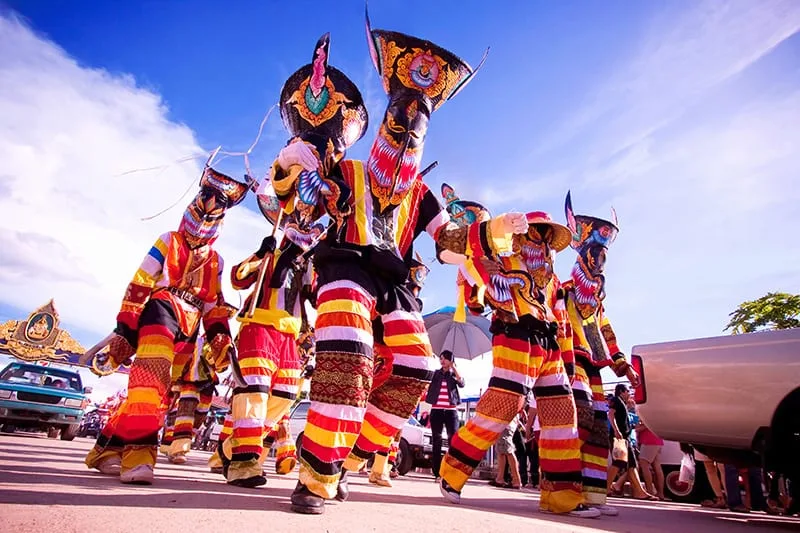
Thailand’s most eccentric festival. Villagers in Dan Sai dress in colourful ghost costumes topped with masks made from giant sticky-rice steamers, dancing through the streets in tribute to the Vessantara Jataka: the tale of Prince Vessantara’s final life before becoming the Buddha. The festival dates are set annually by the village spirit medium, not a fixed calendar.
100,000+ visitors descend on a town of 8,000 people. Accommodation books out months in advance. Getting there requires a car or private transport: Dan Sai has no rail connection.
Read our complete Phi Ta Khon guide: the 3-day schedule, how to get to Dan Sai, and what to expect.
Ubon Ratchathani
July, on Khao Phansa | Ubon Ratchathani | Free
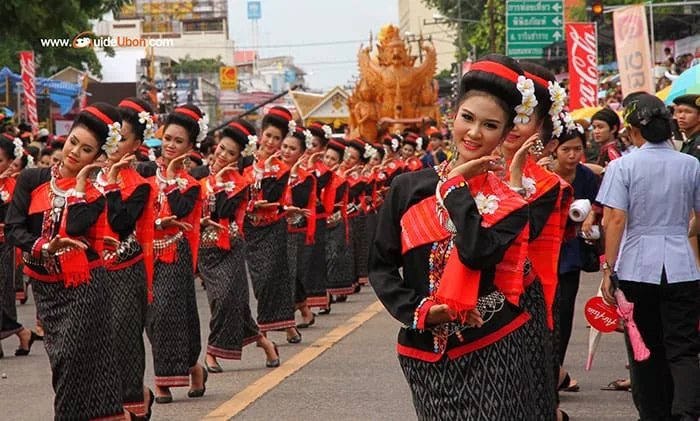
Marking the start of Buddhist Lent (Khao Phansa), temples across Ubon commission enormous carved beeswax candles (some standing several metres tall) that are paraded through the city before being installed in temples for the duration of the 3-month lent period. The carving quality is extraordinary: full scenes from Buddhist mythology in wax.
The main parade runs from Thung Si Mueang Park. The city fills up. Book accommodation weeks in advance.
Naga Fireballs Festival
26 October 2026 | Nong Khai, Mekong River | Free
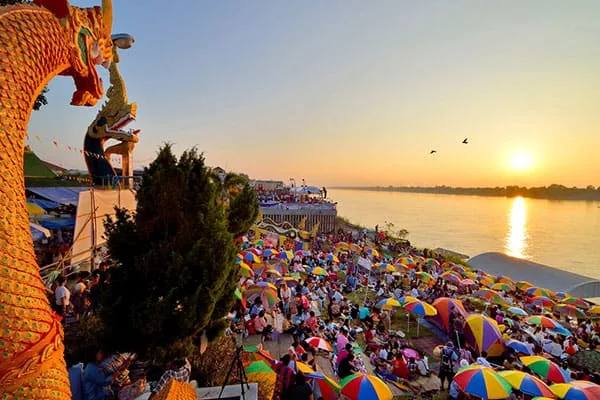
On the night marking the end of Buddhist Lent (Awk Phansa), glowing reddish orbs rise silently from the Mekong River and drift into the night sky before disappearing. Thousands gather on the riverbanks at Phon Phisai District to watch. The phenomenon has been documented for decades; its cause remains officially unexplained (proposed explanations range from methane combustion to military flares on the Laos side).
The spectacle stretches across roughly 250 km of riverbank, with Nong Khai town as the main viewing hub.
Read our complete Naga Fireballs guide: where to watch, how to get to Nong Khai, and what to expect.
Tomorrowland Thailand
11–13 December 2026 | Wisdom Valley, Pattaya | 1-day from 5,100 THB, 3-day from 12,500 THB (2026 sold out)
Asia’s first Tomorrowland edition: the world’s most-watched electronic music festival building a purpose-built venue near Pattaya. Six stages, 50,000+ daily capacity, and the production scale that has made Tomorrowland a benchmark since 2005. Genres span house, techno, trance, and bass music across three nights.
Read our complete Tomorrowland Thailand guide: ticket tiers, travel from Bangkok, and accommodation near the venue.
S2O Songkran Music Festival
11–13 April 2026 | S2O Land, Ratchadaphisek, Bangkok | 3-day passes from 3,500 THB (2026); 2027 dates TBA
Bangkok’s biggest EDM event collides with Songkran. International DJ headliners, industrial water cannons, foam machines, and a crowd soaked to the bone. If traditional Songkran is the family version, S2O is the nightclub version turned up to eleven.
Read our complete S2O guide: tickets, what to wear, and how to survive three days of water and bass.
Monkey Buffet Festival
29 November 2026 | Lopburi | Free
Lopburi sets up banquet tables loaded with 4,000kg of fruit for around 2,000 resident macaques outside the Prang Sam Yod temple. The monkeys swarm the tables in beautiful chaos while thousands of spectators watch. An easy day trip from Bangkok: 2.5 hours by train.
Read our complete Monkey Buffet guide: how to get there, best vantage points, and monkey safety tips.
Buffalo Racing Festival
25 October 2026 | Chonburi | Free
Over a century old, this Chonburi tradition sees water buffalo race down a muddy track while jockeys cling on for dear life. There’s also a buffalo beauty contest (yes, really) and a carnival atmosphere with Isan food stalls. Just 80km from Bangkok. Combine with a Pattaya trip.
Read our complete Buffalo Racing guide: getting to Chonburi, race schedule, and what to expect.
Wonderfruit Festival
3–7 December 2026 | Near Pattaya | From 8,000 THB
Thailand’s premier boutique festival: four days of international music, immersive art installations, wellness workshops, and farm-to-table food on a sprawling green space near Pattaya. Think Burning Man meets Southeast Asian hospitality, with better food and cooler weather.
Read our complete Wonderfruit guide: tickets, glamping, and how to combine it with the islands.
Frequently Asked Questions
What are the most famous festivals in Thailand?
Songkran (April) and Loy Krathong (November) are the two biggest. Songkran is a 3-day nationwide water fight marking Thai New Year. Loy Krathong involves floating decorated baskets on rivers under the full moon. Both are free and happen across the entire country.
How many festivals does Thailand have?
Thailand has over 300 festivals annually, from major national celebrations to regional events like the Phi Ta Khon Ghost Festival in Loei or the Buffalo Racing Festival in Chonburi. Most provinces have their own festivals tied to local traditions, harvests, or the Buddhist calendar.
What is the most visually spectacular festival in Thailand?
The Yi Peng Lantern Festival in Chiang Mai (November): thousands of paper lanterns released simultaneously into the night sky. Loy Krathong, held the same weekend, adds floating candlelit baskets on rivers for a combined effect that’s hard to match anywhere.
When is the best time to visit Thailand for festivals?
April (Songkran) and November (Loy Krathong + Yi Peng) are the peak festival months. October brings the Phuket Vegetarian Festival and Naga Fireballs. December adds Tomorrowland Thailand and Wonderfruit. See our full events calendar for month-by-month dates.
Are Thai festivals safe for tourists?
Yes, Thai festivals are family-friendly and welcoming to visitors. The main exception is Songkran, when road accidents spike sharply (avoid driving, use Grab or taxis). At the Phuket Vegetarian Festival, keep distance from ritual processions. Standard precautions apply everywhere: watch your belongings in crowds, stay hydrated.
Plan Your Festival Trip
Thai festivals are free, public, and genuinely welcoming to visitors, no tickets, tours, or reservations needed for most of them. The hardest part is timing your trip right. Book flights and accommodation 2-3 months ahead for Songkran (April) and Loy Krathong/Yi Peng (November). These are peak tourist seasons and prices reflect it.
For the full month-by-month breakdown including public holidays, see our Thailand Events Calendar.