



















3 Days in Kanchanaburi: Waterfalls, War History & River Life
A 3-day itinerary from Bangkok to Kanchanaburi — Erawan Waterfall, Bridge over the River Kwai, Death Railway, Hellfire Pass, and floating raft hotels.
Duration
3 days
Pace
moderate
Best For
couples, history buffs, nature lovers, weekend trippers
Budget
3,000–36,000 THB per person
Best Months
Nov, Dec, Jan, Feb, Mar
Day-by-Day Itinerary
Tap each day for details, booking links, and tips.
1 Bangkok to Kanchanaburi — Bridge & War Museums
kanchanaburi
Bangkok to Kanchanaburi — Bridge & War Museums
kanchanaburi
Leave Bangkok early — the 2.5-hour drive west passes through flat rice country before the landscape turns hilly and green as you approach Kanchanaburi. Take a minivan from Victory Monument (120 THB, departs every 30 minutes) or the train from Thonburi station (100 THB, slower but scenic — 3 hours through countryside). Arrive by late morning. Head straight to the [Bridge over the River Kwai](/attraction/bridge-over-the-river-kwai/) — the iron railway bridge built by Allied POWs during WWII. Walk across the bridge itself (trains still cross, so step into the refuges when one comes). The bridge is more sobering than spectacular — its power is in what it represents. Morning light is best for photos. After the bridge, visit the JEATH War Museum (50 THB) housed in a replica bamboo POW hut, then the Kanchanaburi War Cemetery across the road — 6,982 Commonwealth graves in rows of immaculate grass. The cemetery is quiet and well-maintained, with each headstone telling a fragment of a story. Afternoon, check into your hotel and explore the town. Kanchanaburi's riverside guesthouses and floating raft hotels are a highlight in themselves — the sound of the river flowing beneath your room at night is the soundtrack to this trip. Walk the riverfront road and eat at one of the floating restaurants. Pad thai on a raft with the River Kwai flowing past is a meal you will remember.
Where to Stay
Kanchanaburi town riverside or floating raft hotel
from 400 THB
from 1,500 THB
from 4,000 THB
Floating raft hotels on the River Kwai are the signature Kanchanaburi experience. Book one for at least one night.
2 Erawan Waterfall — Seven Tiers of Emerald Pools
kanchanaburi
Erawan Waterfall — Seven Tiers of Emerald Pools
kanchanaburi
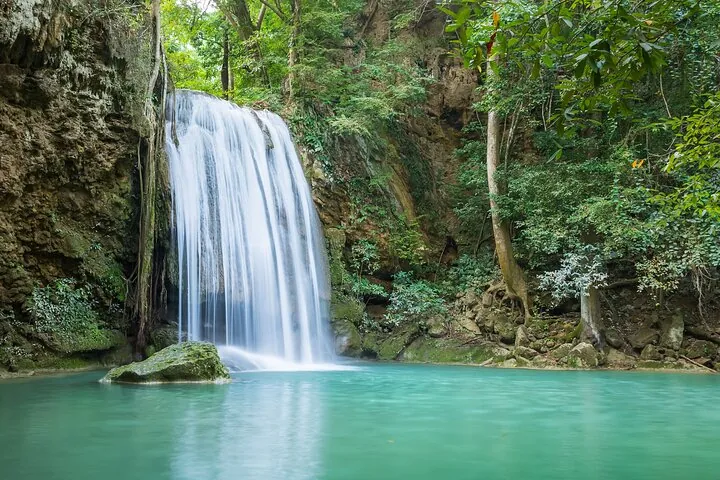
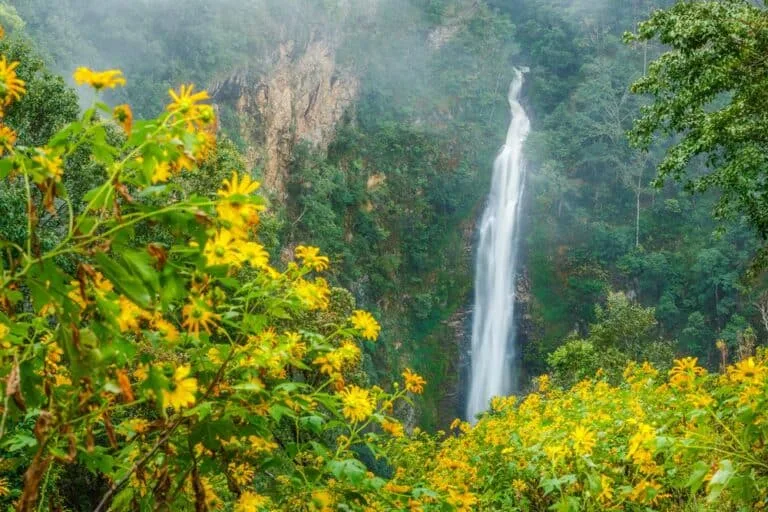
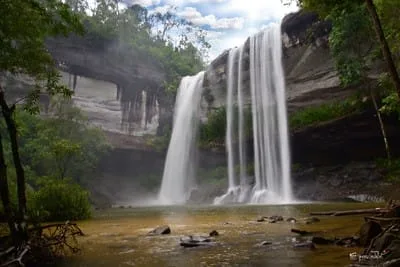
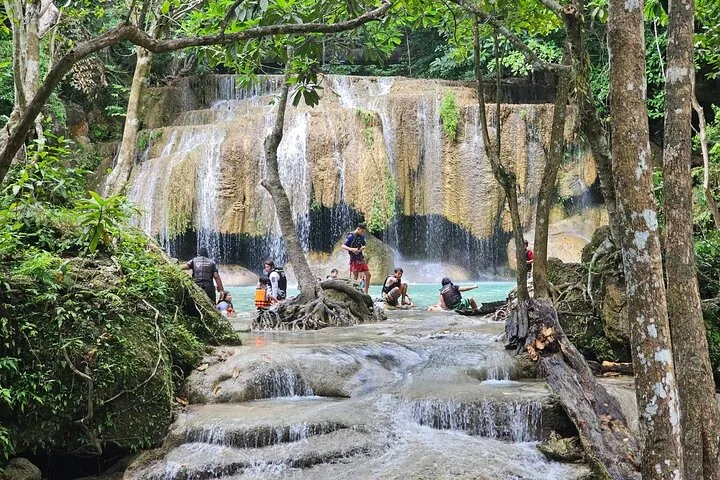
Start early — Erawan National Park opens at 8 AM and the lower pools get crowded by 10 AM. The park is 65 km northwest of town (1.5 hours by songthaew, 50 THB from the bus station, or hire a driver for 1,500–2,000 THB return with waiting time). Entry 300 THB for foreigners. [Erawan Waterfall](/attraction/erawan-waterfall/) is a seven-tier limestone waterfall cascading through jungle, with natural emerald pools at each level. The trail from the entrance to the seventh tier takes 2–3 hours total. Tiers 1–3 are easy (flat path, 20 minutes). Tiers 4–5 get steeper. Tiers 6–7 require scrambling over rocks and tree roots — bring grip shoes, not flip-flops. The best swimming is at tiers 2, 3, and 5. The water is cool and impossibly green — the limestone bed gives it that colour. Small fish nibble your feet (a free fish spa). Tier 5 has the most dramatic setting — water falling into a deep pool surrounded by smooth boulders. Pack a waterproof phone case and a picnic lunch (food stalls at the entrance only, nothing on the trail). Return to Kanchanaburi by late afternoon. Spend the evening at a riverside restaurant — try the grilled river prawns (goong phao) with dipping sauce, a Kanchanaburi speciality. The prawns here are freshwater giants from the Kwai river, charcoal-grilled whole.
Where to Eat
Where to Stay
Same hotel or switch to a floating raft hotel upriver
3 Death Railway & Hellfire Pass — Then Back to Bangkok
kanchanaburi
Death Railway & Hellfire Pass — Then Back to Bangkok
kanchanaburi
→
The morning departure gives the best light. Sit on the left side for river views.
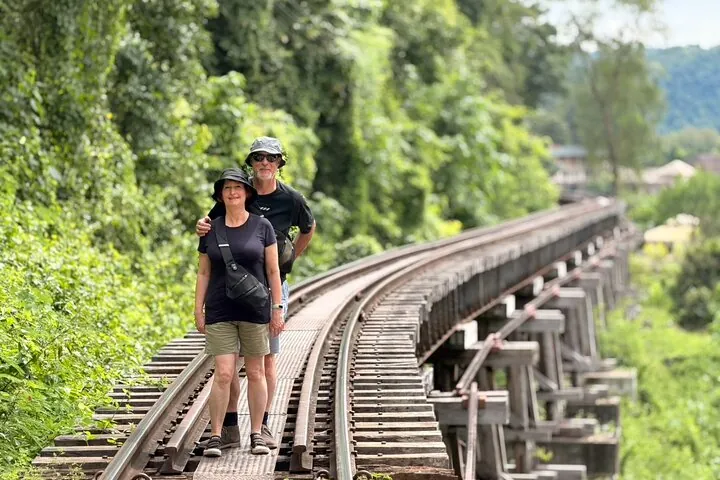
Take the early morning train from Kanchanaburi station along the Death Railway — the line built by POW labour during WWII that cost an estimated 90,000 Asian labourers and 12,000 Allied prisoners their lives. The train crosses the Wang Po viaduct, a wooden trestle bridge clinging to a cliff face above the river. The views are spectacular and the history is harrowing. Ride to Nam Tok station (the end of the line, 2 hours, 100 THB) and arrange transport back. Alternatively, hire a driver and visit [Hellfire Pass Memorial Museum](/attraction/hell-fire-pass-memorial-museum/) — the most powerful WWII site in the region. The museum (free entry, donations welcome) documents the construction of the railway through a mountain cutting using only hand tools. Walk the 1.5 km trail through the actual Hellfire Pass cutting — the rock walls still bear the marks of pickaxes and drill holes. The pass was named by prisoners who worked by torchlight, the flickering flames casting hellish shadows on the rock. Allow 1.5–2 hours for the museum and walk. Head back toward Bangkok after lunch. If time allows, stop at [Sai Yok Noi Waterfall](/attraction/sai-yok-noi-waterfall/) (just off the main road, 15 minutes detour) — a wide cascade that is particularly photogenic in the wet season. Arrive Bangkok by evening. **Insider Tip:** If you have a fourth day, continue upriver to Sangkhlaburi and the Mon Bridge — Thailand's longest wooden bridge, crossing a reservoir lake with mountains behind. It adds 3 hours of driving but is one of the most photogenic spots in western Thailand.
Where to Stay
Return to Bangkok
Before You Go
Visa
Most nationalities get 60-day visa-free entry.
Currency
Thai Baht (THB). ATMs in Kanchanaburi town. Carry cash for national parks and small vendors.
Connectivity
4G coverage good in town and main tourist areas. Patchy in Erawan National Park and along the Death Railway.
Best eSIM for Thailand →Safety
Safe destination. Main risks: slippery rocks at waterfalls (wear grip shoes), strong river currents in rainy season, and heat exhaustion on hikes. Bring water.
Language
Thai. English understood at tourist sites but limited in local restaurants. Google Translate useful.
Kanchanaburi
Kanchanaburi is the easiest meaningful escape from Bangkok — close enough for a weekend, deep enough to feel like a proper trip. The combination of WWII history, jaw-dropping waterfalls, and river-life atmosphere is unlike anything else in Thailand. Most visitors come for Erawan Waterfall, stay for the war history, and leave planning a return trip.
The town is 130 km west of Bangkok, where the Kwai Noi and Kwai Yai rivers merge. Beyond the main sites, the province stretches into mountains and jungle along the Myanmar border — Srinagarindra Dam, tiger temples (now just the ruins), and hot springs at Bo Khlueng.
Getting There
From Bangkok:
- Minivan from Victory Monument — every 30 minutes, 120 THB, 2.5 hours. The fastest option
- Train from Thonburi (Bangkok Noi) station — two departures daily, 100 THB, 3 hours. Scenic but slow
- Private car — 2–2.5 hours via Highway 4. Useful if you want to stop at Erawan on the way
Best Time to Visit
November to February is ideal — cool, dry weather, waterfalls at full flow from the late monsoon. March–May is hot (35°C+) and Erawan’s upper tiers may have reduced water. June–October brings rain that makes the waterfalls spectacular but the trails slippery. The Death Railway train runs year-round.
What to Pack
- Grip shoes for Erawan’s rocky trails (not sandals)
- Swimwear and a waterproof phone case
- Sunscreen and a hat (limited shade on the upper tiers)
- Insect repellent (jungle trails)
- A light layer for early mornings (15–20°C in cool season)
Top Attractions on This Route





Tours Along the Way

![Erawan Waterfall and Kanchanaburi Private Tour [Optional Luxury]](https://images.thaiholidayguide.com/images/tours/erawan-waterfall-and-kanchanaburi-private-tour-optional-luxury.webp)
Erawan Waterfall and Kanchanaburi Private Tour [Optional Luxury]

From Bangkok : Kanchanaburi Tour with Floating market Visit

Private Tour to Erawan Waterfall and Boat Tour in Kanchanaburi